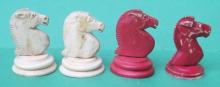
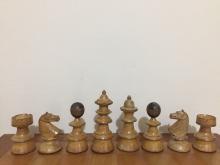
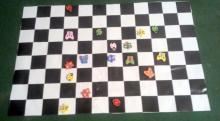
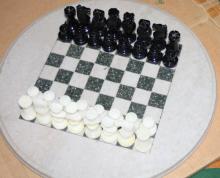
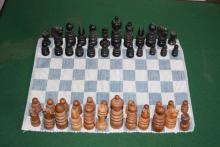
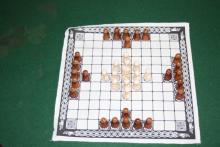
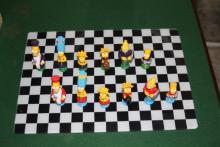
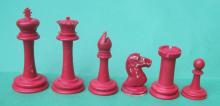
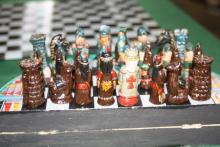
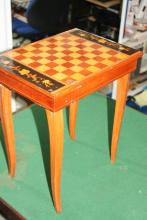
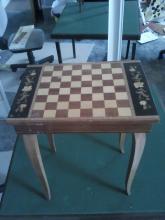
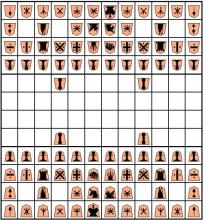
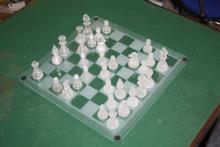
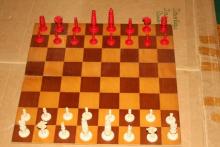
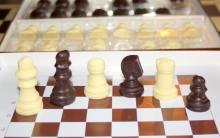
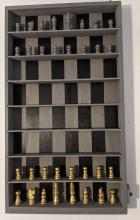
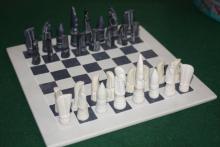
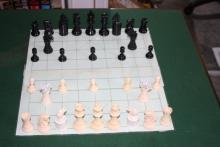
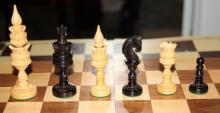
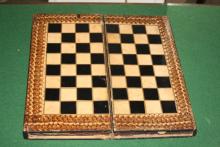
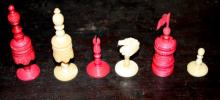
I had a cheerful exchange recently with a correspondent, who wanted to teach her daughter how to play chess, and was attracted to the Children's Chess Set (from Devon's very own House of Marbles). I like that set a lot, and in a similar vein you can still get hold
[Event "Game for analysis"]
[Site "analysis: BCF example"]
[Date "1995.??.??"]
[Round "?"]
[White "BCF example game for analysis"]
[Black "?"]
[Result "1-0"]
[ECO "E09"]
[PlyCount "55"]
1. d4 Nf6 2. c4 e6 3. g3 d5 4. Bg2 Be7 5. Nf3 Nbd7 6. O-O 6... c6 {
[DIAGRAM] a. Can you suggest a more active line for Black instead of this move?} (6...
c5 {*N.B. all answers are DR's and not BCF's!*}) 7. Nbd2 7... O-O {[DIAGRAM] b. Would
[Event "Game for analysis"]
[Site "analysis: BCF example"]
[Date "1995.??.??"]
[Round "?"]
[White "BCF example game for analysis"]
[Black "?"]
[Result "1-0"]
[ECO "E09"]
[PlyCount "55"]
1. d4 Nf6 2. c4 e6 3. g3 d5 4. Bg2 Be7 5. Nf3 Nbd7 6. O-O 6... c6 {
[DIAGRAM] a. Can you suggest a more active line for Black instead of this move?} 7. Nbd2 7... O-O {[DIAGRAM] b. Would
7...dxc4 be better than this move? Give a simple reason for your answer.} (7...
Just done a quick whizz through the site to patch up all mentions of
Blumenfeld's advice (which was passed on by Kotov and Webb in their
best known books). The advice is:
Six positions to consider, A-F; pick one, perhaps the one in the top
left (A). Now, I want you not just to think
up a move, but notice how you think it up. You will need to write
down your thoughts, or get someone to write while you think. Off
you go, take as long as you like.
"Games like this [Penrose-Botvinnik] (and there were plenty in this tournament) impressed on me that 'wanting to win' was perhaps more important than 'playing good moves'."